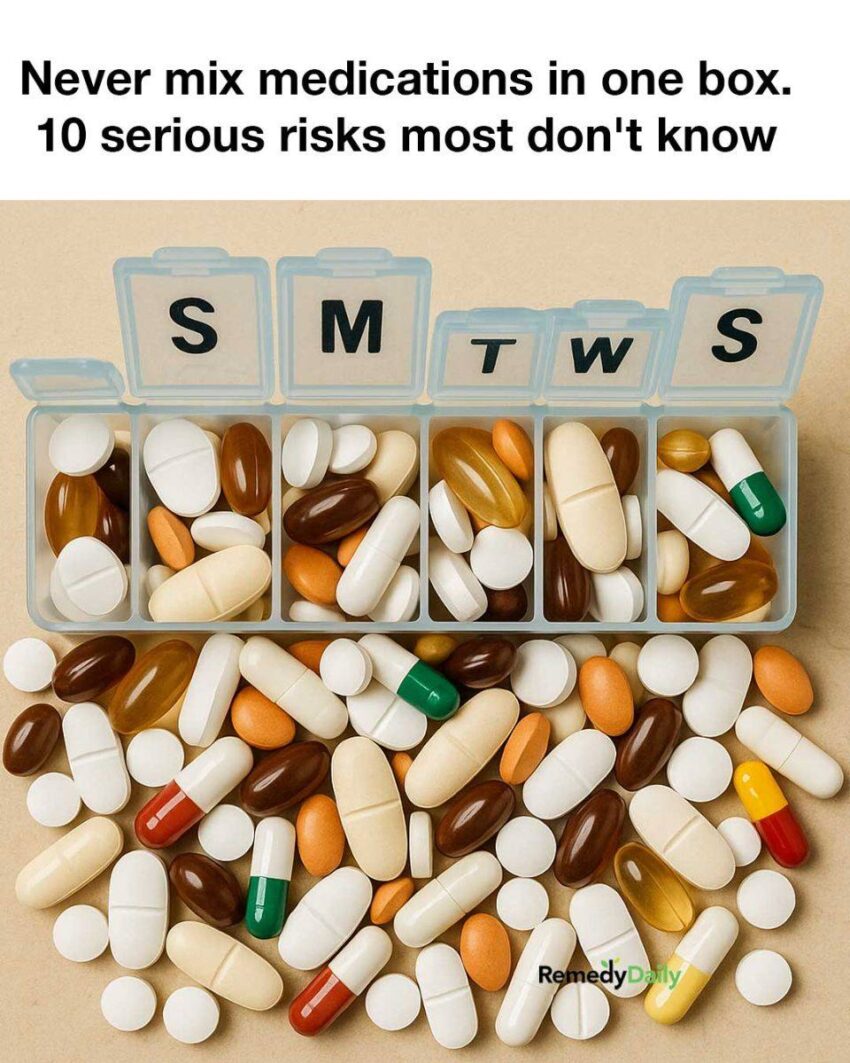
Here’s a full guide on why you should never mix medications in one box and the 10 serious risks most people don’t realize:
💊 Never Mix Medications in One Box: 10 Serious Risks
Many people keep all their pills together in a single container for convenience, but this can be dangerous. Mixing medications increases the chance of errors, side effects, and serious health complications.
1️⃣ Accidental Overdose
- Pills that look similar may be taken twice by mistake.
- High-risk for drugs like painkillers, blood thinners, and heart medications.
2️⃣ Wrong Medication Taken
- Confusing pills can lead to taking the wrong medication at the wrong time.
- Can result in treatment failure or dangerous reactions.
3️⃣ Reduced Effectiveness
- Some medications lose potency when exposed to light, air, or other chemicals.
- Mixing in one box may weaken certain drugs.
4️⃣ Dangerous Drug Interactions
- Some medications react chemically with each other, forming harmful compounds.
- Example: Mixing nitrates with ED medications or certain antibiotics with antacids can be risky.
5️⃣ Increased Side Effects
- Mixing meds increases the chance of unexpected side effects.
- Hard to track which drug caused a reaction if taken together.
6️⃣ Allergic Reactions
- If a person is allergic to one medication, accidental ingestion from a mixed box can trigger serious reactions, even anaphylaxis.
7️⃣ Difficulty in Emergency Situations
- In case of an overdose or medical emergency, paramedics or doctors may not know what was taken, delaying proper treatment.
8️⃣ Expired or Degraded Medications
- Mixing meds makes it hard to check expiration dates.
- Taking expired drugs can reduce effectiveness or be toxic.
9️⃣ Confusion for Caregivers
- Elderly patients or caregivers can easily make mistakes if multiple drugs are mixed together.
- This is especially risky for patients with chronic illnesses.
🔟 Legal and Safety Risks
- Some medications require separate storage by law (e.g., controlled substances).
- Mixing medications may inadvertently violate safety regulations.
✅ Best Practices
- Keep each medication in its original container with labels intact.
- Use pill organizers only if clearly labeled for each time slot, but do not mix different medications in the same compartment.
- Regularly check expiration dates.
- Consult your pharmacist or doctor before combining or changing medication routines.
⚠️ Bottom Line
Mixing medications in one box is not worth the risk. It may seem convenient, but the potential for overdose, side effects, and dangerous interactions is high. Always keep medications separate and clearly labeled to protect your health.
If you want, I can make a list of the most commonly mixed medications that are particularly dangerous when combined for easy reference.
Do you want me to make that list?
